Backyard & Pool · Honest review
Closing your pool for winter: the cover that finally stopped the flapping
Every fall we go through the same routine — balance the water, drop the level, pull the lines, and cover it up before the first freeze. And for years, the covering part was the step that let us down. Thin covers ballooned in the wind, flapped all night, and by February they had torn right along the edge. Here's how we winterize our pool now, and the thick, properly anchored cover that made the difference.
As an Amazon Associate, Little Hack Wins earns from qualifying purchases. Price and availability can change — check on Amazon.
Watch: our pool cover on, anchored, and ready for winter
Why this is the best pool cover we've used to winterize our pool
Thick woven fabric that doesn't flap or tear
This is the thing most winter covers get wrong. A thin cover acts like a sail — the wind lifts it, it snaps up and down all night, and every one of those snaps works at the stitching until a seam gives out. This fabric is genuinely heavy in your hands. It lies flat on the water instead of ballooning, so on a windy night there's no flapping, no cracking sound at 2 a.m., and no torn corner to discover in spring. After a full season of wind, rain and snow load, ours came off in one piece.
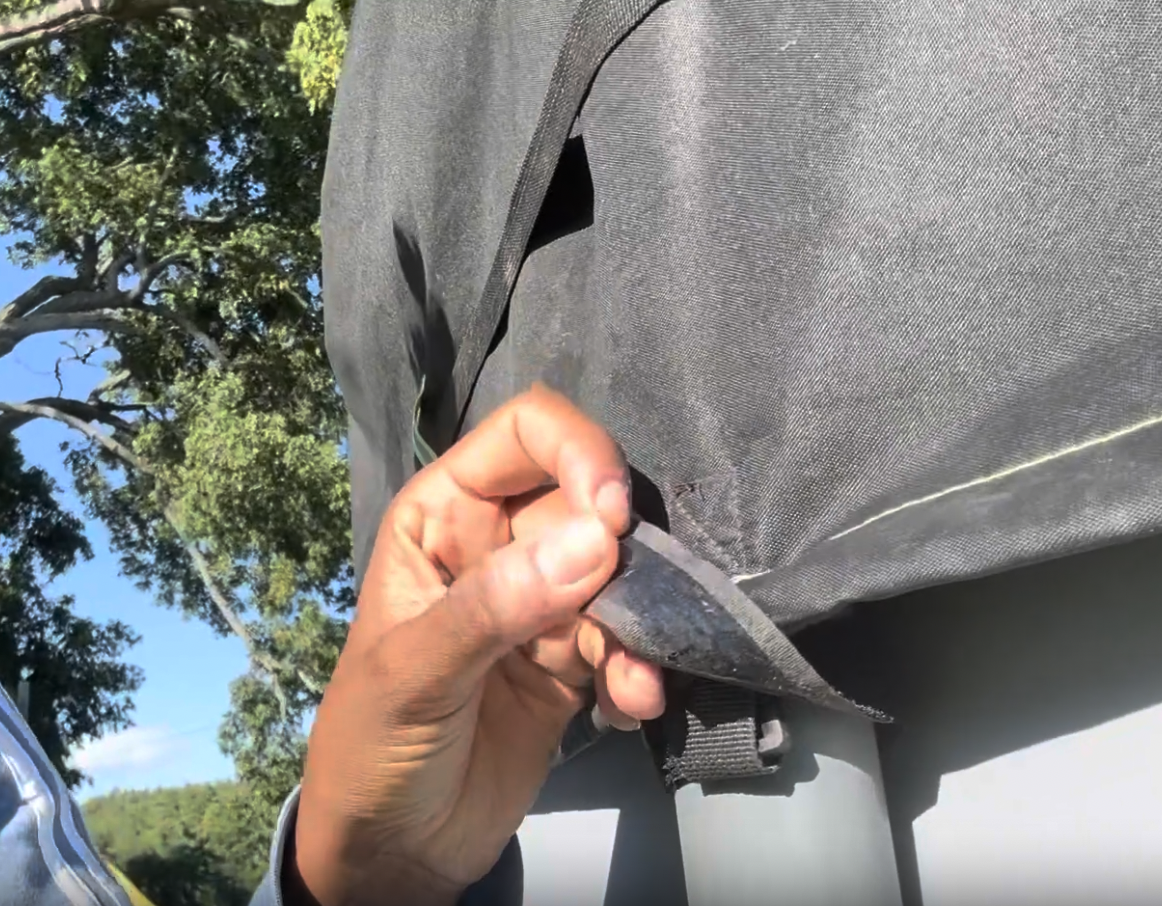
Straps that actually stay put
The straps wrap the pool posts and hold with a rubber backed grip, so they don't creep down or slide sideways as the temperature swings. The velcro seals each strap flat against the cover, which means no loose tail whipping around for the wind to grab. It's a small detail that does a lot of work: a cover only fails where the wind can get underneath it, and secure straps close off that gap.
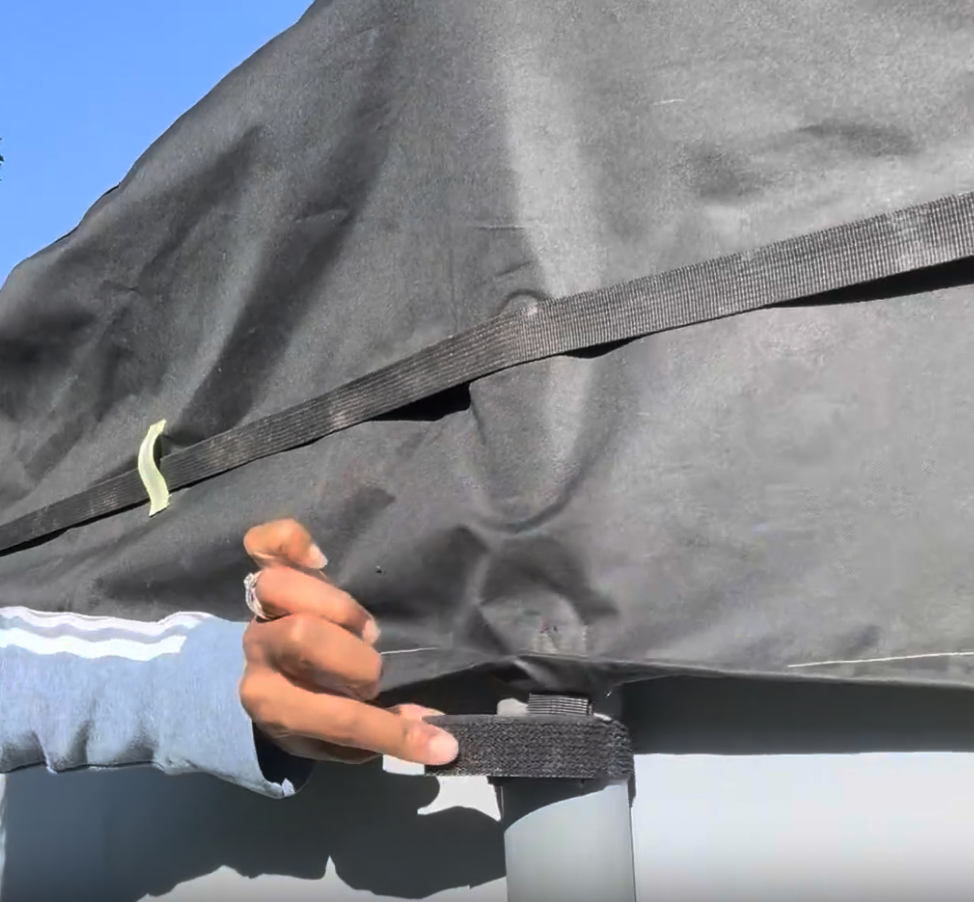
A reflective band around the pool you pull to anchor it
A reflective band runs the whole way around the pool, and you pull it to draw the cover snug against the wall. That single pull does what a dozen fiddly clips can't — it tensions the edge evenly, all the way around, so there's no slack corner waiting for a gust. The reflective strip also means you can see the pool's edge in the dark, which is reassuring when you have kids and a yard that gets dark at 5 p.m. in December.
One thing to know: measure your pool before you order — a winter cover needs overlap past the edge to anchor properly, so size up rather than down. And get the cover on while the deck is still dry; wrestling heavy fabric in the rain is nobody's idea of a win.
As an Amazon Associate, Little Hack Wins earns from qualifying purchases. Price and availability can change — check on Amazon.
How to close your pool for the winter, step by step
This is the order we follow every fall. Your pool may differ slightly — always check your equipment manual before draining anything.
- 1
Wait for the water to cool
Once the water sits below about 60°F, algae growth slows way down. Close while it's still warm and you'll find green water in spring.
- 2
Deep clean first
Brush the walls, vacuum the floor, and skim everything off the surface. Whatever you leave in the pool sits there for six months.
- 3
Balance the water
Get pH, alkalinity and calcium hardness in range before you add winterizing chemicals — they don't work properly in unbalanced water.
- 4
Shock and add winterizer
Shock the pool, let it circulate, then add your winter algaecide so the water stays clear under the cover.
- 5
Lower the water and clear the lines
Drop the level as your cover and climate require, blow out the plumbing, and plug the returns so nothing freezes and cracks.
- 6
Store the equipment
Drain and stow the pump, filter and hoses somewhere dry. Bring the ladder and accessories inside too.
- 7
Cover it and anchor it properly
Spread the cover evenly, strap it at every post, then pull the perimeter band to tension the edge all the way around. Walk the pool once more and check for slack — that's where wind starts.
Pool closing questions people ask us
Do you have to cover a pool in the winter?
You don't have to, but an uncovered pool collects leaves, dirt and rainwater all winter, which means a much longer, dirtier, more expensive opening in spring. A solid winter cover keeps debris and sunlight out, so the water stays clearer and your closing chemicals last.
When should I close my pool for winter?
Wait until the water holds steady below about 60°F (15°C). Closing while the water is still warm lets algae keep growing under the cover; closing too late risks freeze damage to lines and equipment.
What's the difference between a winter cover and a solar cover?
A solar cover is a thin bubble blanket that heats the water during swim season. A winter cover is heavy, opaque fabric built to block sunlight and hold up to wind, snow and ice for months. They aren't interchangeable.
Do you pull a pool cover tight when closing for winter?
Snug, not drum tight. You want the cover anchored firmly so wind can't get underneath it, with a little give so snow load and water weight don't stress the seams or the pool wall.
How do I stop my winter pool cover from blowing off?
Wind gets under a loose edge and lifts the whole cover. Use a cover with a continuous cable or reflective pull band around the perimeter, tension it evenly, and secure every strap so the edge stays flat against the pool wall.
How long does a good winter pool cover last?
A thick woven cover that's properly anchored and stored dry will usually give you several seasons. Thin covers tend to flap in the wind, and flapping is what tears them — most failures start at the edge, not the middle.
Ready to winterize your pool?
This is the exact cover on our pool — thick fabric, secure straps, and a reflective pull band that keeps the whole edge anchored.
As an Amazon Associate, Little Hack Wins earns from qualifying purchases. Price and availability can change — check on Amazon.